
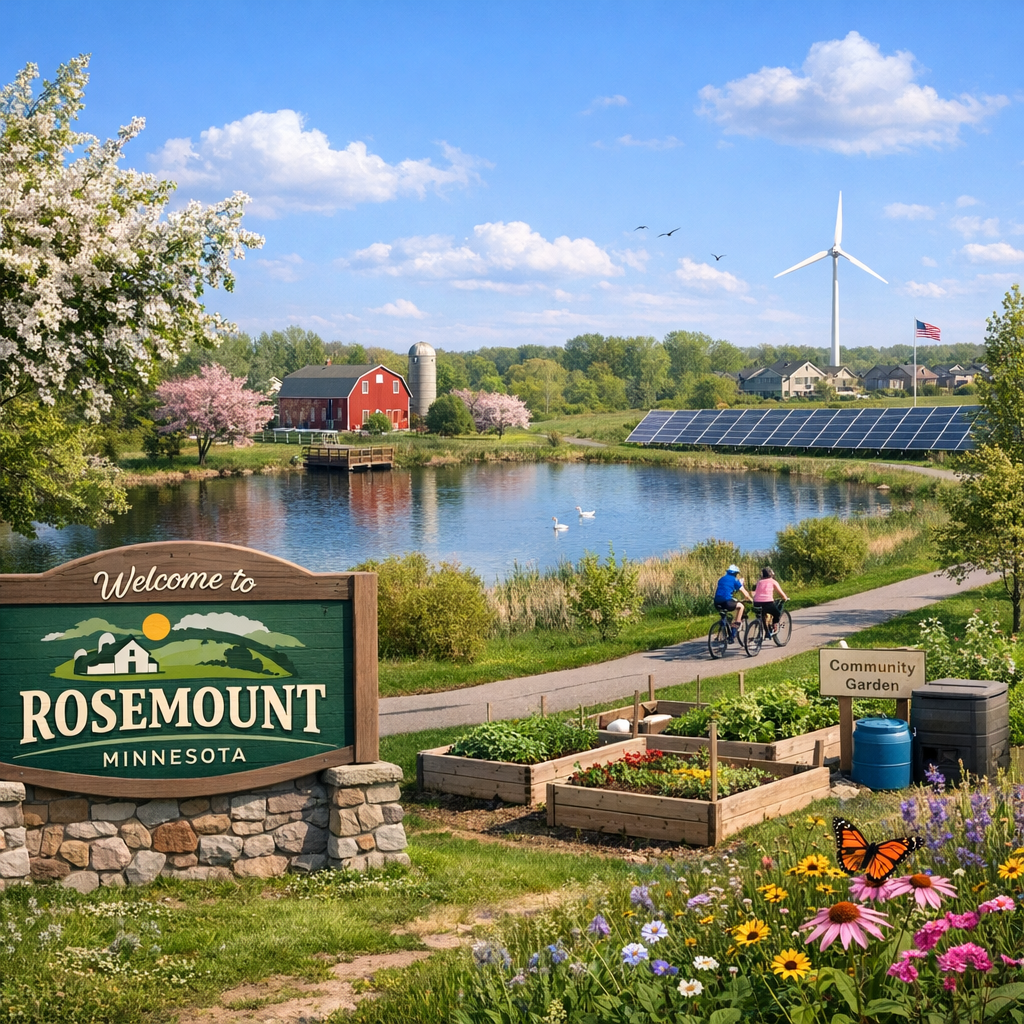
Rosemount, Minnesota, experiences a diverse range of weather conditions throughout the year, characteristic of a humid continental climate. Residents encounter warm, wet summers and cold, snowy winters, with temperatures typically ranging from 9°F to 82°F. The warm season spans from late May to mid-September, peaking in July with average highs around 82°F. Conversely, the cold season lasts from late November to early March, with average highs below 36°F.
Seasonal Weather Patterns
Each season in Rosemount brings distinct weather patterns:
- Spring: Transitioning from cold to warmer temperatures, spring often sees increased rainfall, averaging 3.17 inches in April and 4.38 inches in May.
- Summer: Warm and humid conditions prevail, with July being the warmest month. Average rainfall peaks in June at 5.13 inches.
- Fall: Gradual cooling with decreasing precipitation, averaging 3.45 inches in September.
- Winter: Cold temperatures dominate, with January being the coldest month, averaging lows around 6.8°F and highs near 23.3°F.
Environmental Initiatives
The City of Rosemount is committed to protecting its natural resources, particularly surface water quality. Residents are encouraged to participate in several initiatives:
Adopt a Storm Drain
By keeping local storm drains clear of debris, residents can prevent flooding and improve water quality. This program requires a commitment of approximately 15 minutes twice a month.
Wetland Health Evaluation Program (WHEP)
Volunteers monitor the health of local wetlands by assessing plant life and macroinvertebrates. Free training is provided for participants.
Rainwater Harvesting
Installing rain barrels to collect runoff from rooftops helps reduce excess runoff and provides water for landscaping needs. The city offers rebates for qualifying rain barrels and cisterns.
Raingardens
Creating raingardens with plants that tolerate saturated soils can intercept and infiltrate runoff before it enters the storm system. The city recommends participating in the Landscaping for Clean Water Program for guidance and potential grants.
For more information on these programs and additional tips for protecting surface water, residents can visit the city’s official website.