

Rosemount, Minnesota, continues to experience a dynamic real estate market characterized by steady home values, a balanced rental sector, and significant new developments. This article provides an overview of the current housing trends, rental market insights, and upcoming projects that are shaping the community’s landscape.
Current Housing Market Trends
As of mid-2026, the median home value in Rosemount stands at approximately $439,658, reflecting a modest 0.4% increase over the past year. Homes typically go pending in around 20 days, indicating a relatively brisk market pace. The median sale price is reported at $376,333, with a median list price of $454,967, suggesting that homes are selling close to their asking prices. Additionally, 43.7% of sales have been above the list price, highlighting competitive buyer interest.
Rental Market Insights
The rental market in Rosemount remains robust, with an average rent of $1,985 per month, slightly above the national average. This represents a 3.3% year-over-year increase, indicating sustained demand for rental properties. The availability of rental units is limited, with only 29 active listings, which may contribute to the upward pressure on rental prices.
New Developments and Community Growth
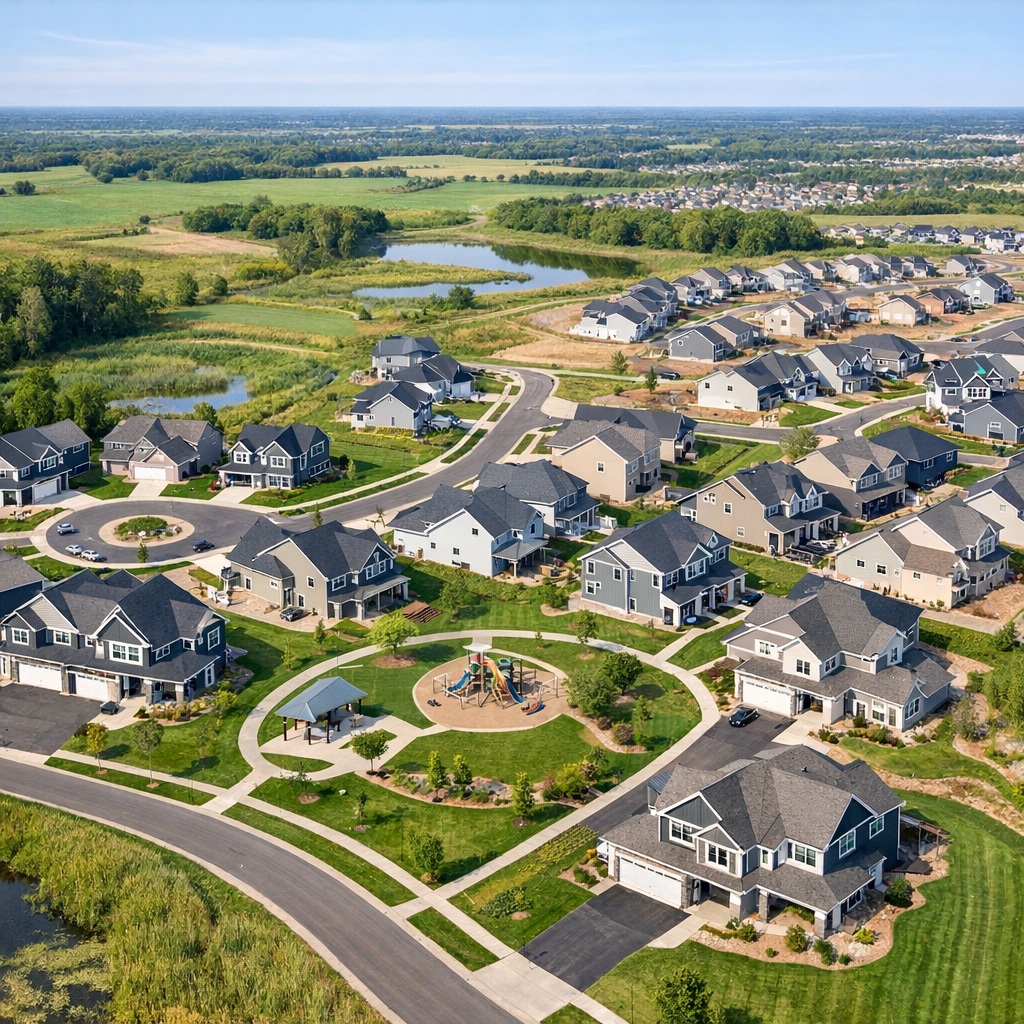
Rosemount is witnessing significant development activity aimed at accommodating its growing population and enhancing community amenities. Notably, the Amber Fields neighborhood is a master-planned community offering new construction homes, a central park, and access to the highly regarded Rosemount-Apple Valley-Eagan School District. This development emphasizes connectivity and green spaces, aligning with the community’s commitment to quality living.
In 2023, the city experienced record-breaking building activity, with total permit valuations reaching $304 million—a 100% increase from the previous year. Residential construction led this surge, with substantial growth in single-family homes, townhomes, and multifamily units. Looking ahead, commercial and industrial developments are expected to continue, including large projects like “Project Bigfoot,” further contributing to Rosemount’s economic vitality.
Conclusion
Rosemount’s real estate market reflects a community in transition, balancing steady home values and rental demand with ambitious development projects. For prospective buyers, renters, and investors, staying informed about these trends is essential for making strategic decisions in this evolving landscape.