
Rosemount, Minnesota, experiences a diverse climate characterized by distinct seasonal changes. Summers are warm and wet, with average high temperatures reaching 82°F in July, while winters are cold and snowy, with average lows around 9°F in January. The transitional seasons of spring and fall offer moderate temperatures and varying precipitation levels.
Water Quality and Wellhead Protection
The City of Rosemount is committed to providing safe and clean drinking water to its residents. Collaborating with the Minnesota Department of Health, the city ensures compliance with the Safe Drinking Water Act standards. Annual Water Quality Reports are published to keep the community informed about water safety and any necessary actions. In 2026, the city began updating its Wellhead Protection Plan, a multi-year process aimed at safeguarding the community’s water supply from potential contaminants.
Stormwater Management
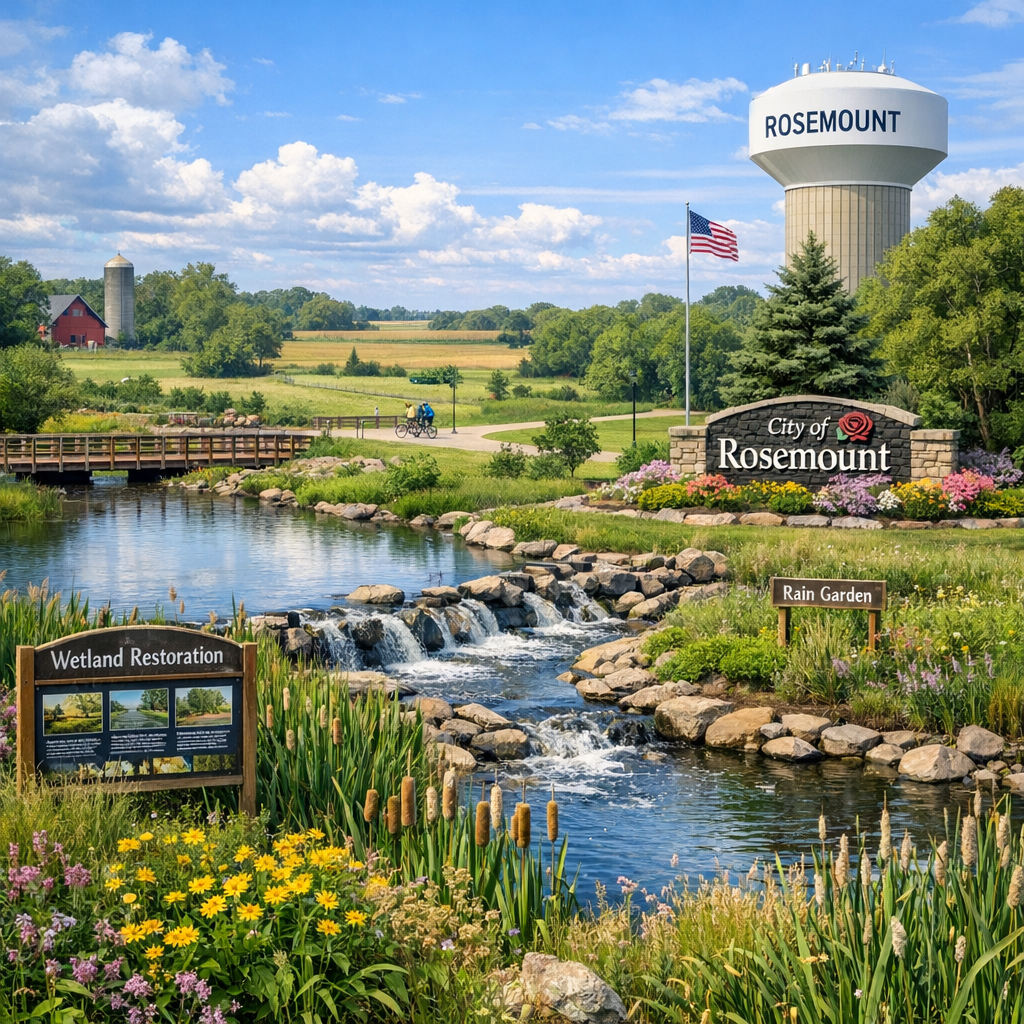
To prevent flooding and protect water quality, Rosemount operates a Municipal Separate Storm Sewer System (MS4). This system manages rain and snow runoff through a network of streets, gutters, drains, and ponds. Regular inspections and maintenance, including mowing and removing overgrowth around stormwater ponds, are conducted to ensure the system functions effectively and complies with the Minnesota Pollution Control Agency (MPCA) requirements.
Environmental Challenges and Responses
In recent years, Rosemount has faced environmental challenges related to air quality. Residents have reported concerns about emissions from local industrial facilities. In response, the U.S. Environmental Protection Agency (EPA) reached a settlement with Spectro Alloys Corporation in 2021, requiring the company to upgrade air pollution control equipment at its Rosemount facility. These upgrades aim to reduce air emissions and protect public health in the surrounding area.
Additionally, the SKB Environmental landfill in Rosemount has taken proactive steps to address per- and polyfluoroalkyl substances (PFAS) contamination. In December 2023, the facility partnered with ALTRA SANEXEN to install and operate the first non-pilot PFAS treatment plant for landfill leachates in the United States. This plant employs foam fractionation technology to capture and concentrate PFAS substances, significantly reducing their presence in leachate and enhancing the quality of water delivered to municipal wastewater partners.
Through these initiatives and ongoing efforts, Rosemount continues to prioritize environmental stewardship and the well-being of its residents.