
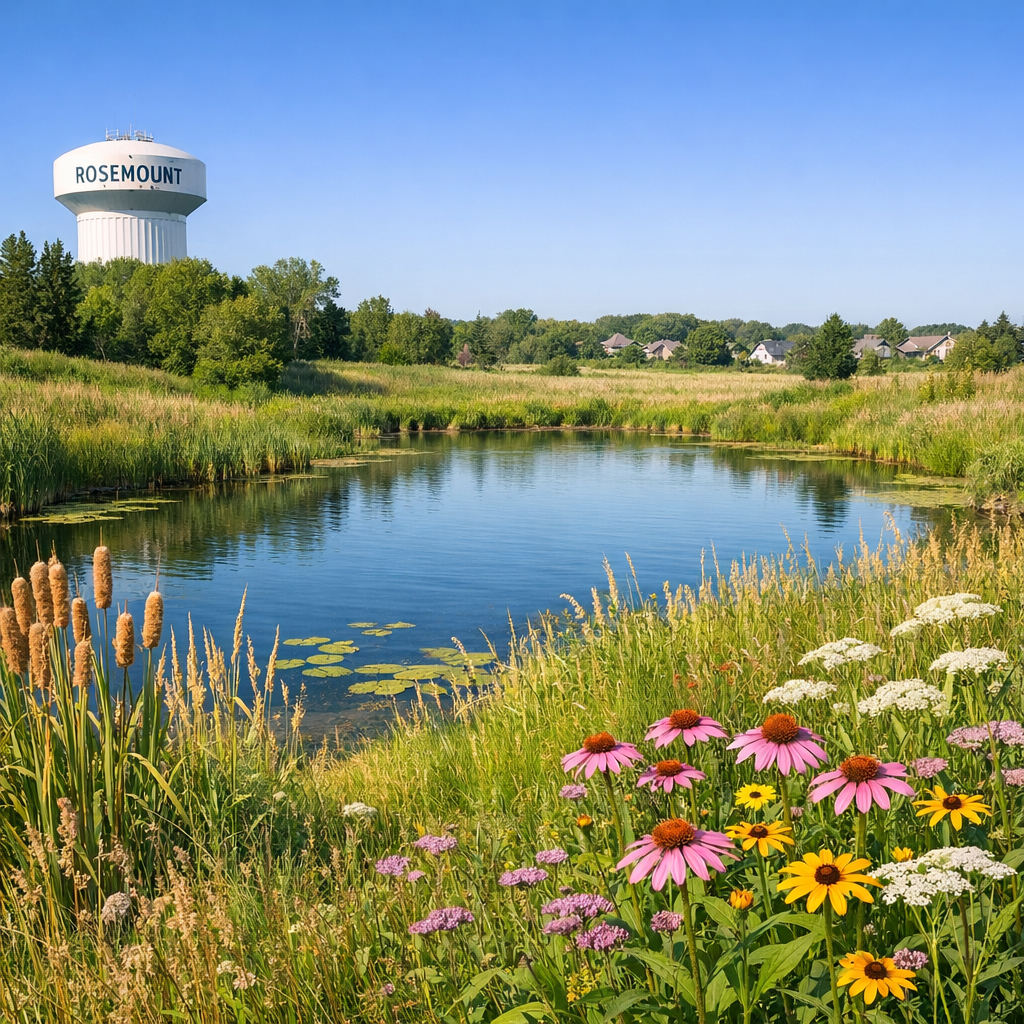
Rosemount, Minnesota, experiences a humid continental climate characterized by hot summers and cold winters. Average high temperatures range from 23.3°F (-4.8°C) in January to 82.1°F (27.8°C) in July, with annual precipitation averaging 34.88 inches (885.94 mm). The city typically sees its first frost between October 1 and October 10, and the last frost between April 21 and April 30, resulting in approximately 125 to 150 frost days annually.
Water Quality and Wellhead Protection
The City of Rosemount is committed to providing safe and clean drinking water to its residents. In collaboration with the Minnesota Department of Health, the city ensures compliance with the Safe Drinking Water Act standards. Annual Water Quality Reports are published to keep the community informed. Notably, in early 2026, the city addressed elevated levels of Gross Alpha radiation in Well #8 by submitting a plan of action to the Minnesota Department of Health, which was accepted in April 2026. This plan outlines steps to mitigate the issue and maintain water safety.
Additionally, Rosemount is updating its Wellhead Protection Plan, a multi-year process expected to conclude in mid-2028. This initiative aims to safeguard the community’s water supply from potential contaminants, emphasizing the importance of proactive measures to ensure long-term water quality.
Stormwater Management
Effective stormwater management is crucial for preventing flooding and protecting water quality. Rosemount operates a Municipal Separate Storm Sewer System (MS4) that manages rain and snow runoff through a network of streets, gutters, drains, and ponds. The city holds a stormwater permit from the Minnesota Pollution Control Agency (MPCA), requiring inspections of all ponds and outfalls at least once every five years. These inspections typically occur from June through fall.
To maintain compliance and functionality, the city conducts mowing and removal of overgrowth around select stormwater ponds and natural areas from late summer into fall. Mowers are set to a height of 8 inches to minimize damage to native plants and prevent erosion, targeting brush, grasses, and invasive or problematic trees.
Environmental Initiatives
In December 2023, SKB Environmental, a subsidiary of Waste Connections, partnered with ALTRA SANEXEN to install and operate the first non-pilot PFAS treatment plant for landfill leachates in the United States at the SKB Rosemount Landfill. This plant employs foam fractionation, a cost-effective method that leverages PFAS’s foaming properties to capture and concentrate these substances from leachate. The facility treats an average daily flow of 72,000 gallons, achieving up to 99% removal of PFOA and PFOS compounds, thereby enhancing the quality of leachate delivered to municipal wastewater partners.
These efforts underscore Rosemount’s dedication to environmental stewardship and the well-being of its residents. By understanding the city’s climate patterns and supporting ongoing environmental initiatives, the community can continue to thrive while preserving its natural resources.